
Unpopular Opinion: Using visual clichés doesn’t make you a lazy creative, it makes you understood
Leaning into visual clichés and an exercise to combine and twist the obvious.
Here’s an unpopular opinion: using visual clichés doesn’t make you a lazy creative, it makes you understood. Some might choose to steer away from the obvious but I like to go knee deep into it. It’s what you do with the obvious, that makes the difference.
Why the obvious is important
I personally don’t believe that the most obvious idea will mean you are a lazy creative. Yes, it’s an easy answer, but easy often means instantly understood. This is because visual clichés are already a familiar symbolism in peoples minds.
However, I do recognise that culturally, symbolism can mean different things across the globe. For example, a lightbulb’s primary metaphor denotes a meaning of innovation, insight and a sudden, bright idea. This is why I might preliminary use this object in a cartoon or illustration, for example. Beyond this, across the globe, a lightbulb, or light in general, can symbolise enlightenment, protection, hope and spirituality. Even the colour you might use can be culturally specific. Red, here in the UK, can mean danger, but in China red is associated with life giving energy.
Whatever you’re doing, it is always important to know your audience and where your work will be seen. This is primarily for international commissions I might add. But, wherever you are in the world, obvious symbolism can lead to a better understanding of what your’e trying to depict. But please, put you’re own twist on it.
The Bright Side blog
I always try to combine and twist obvious symbolism where I can. Take the illustration for my Bright Side blog on for example. Here I have combined the meaning of the lightbulb (insight and ideas) with the pencil (a primary tool for drawing or illustrating).
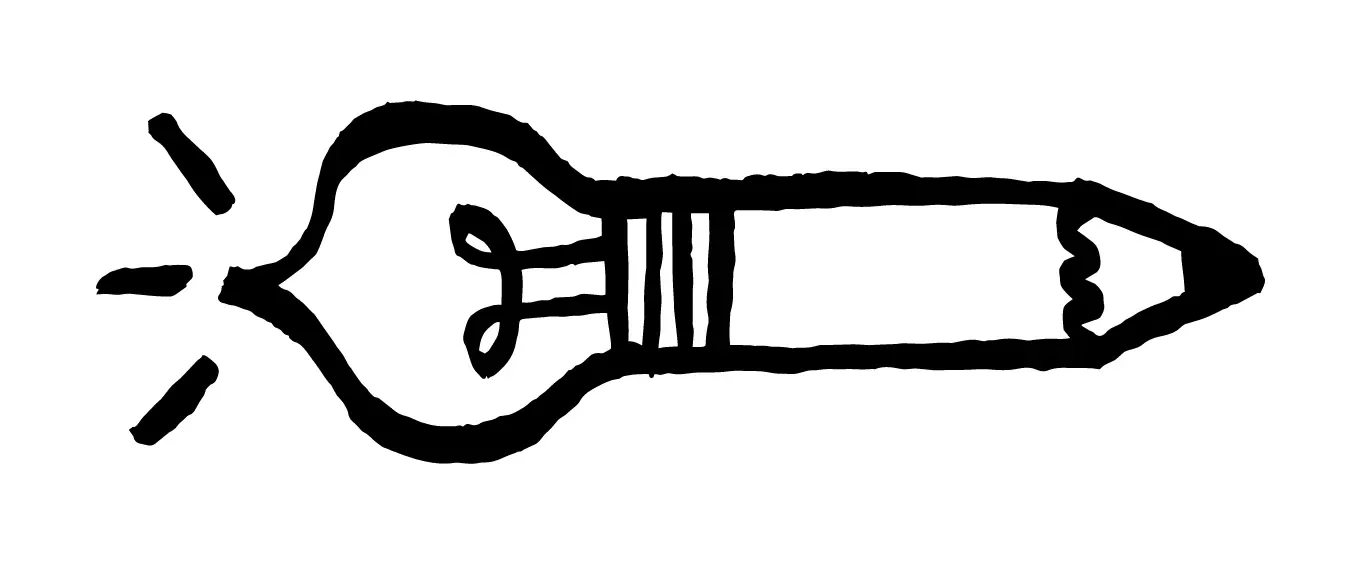
Here I twist the symbolism by combining the two and saying that this blog is about insight and ideas, centred around illustration. Indeed, many ideas, whatever the creative discipline, can begin life with the humble pencil. I do more than just illustrate after all. Furthermore, the blog is called the Bright Side, so the lightbulb works perfectly here in conveying the positive nature of the blog which shines a light on my freelance practice.
The twist combination exercise
Like a comedian might take a familiar cultural theme or abstract idea and twist it into a funny story, you too can twist and combine obvious visuals to make the story you’re trying to tell something memorable and thought provoking.
I’m going to outline some words and phrases, centred around themes below to help you work in this exercise. I’m going to illustrate and combine one prompt myself too, so you get the gist of what to do.
The prompts and objects
Time is money
- Obvious visual objects: clock and a symbol of money.Launch an idea
- Obvious visual objects: lightbulb and a rocket.Listen to your heart
- Obvious visual objects: heart symbol and an ear.
Rules and tips
To keep things simple, try and stick to the objects suggested. Just don’t forget the original prompt. Remember, constraints are important. Think of these like article titles, or their concepts, that you might be commissioned to illustrate for a publication. In this type of commission you won’t get to reinvent the headline, but you do get to bring it to life in your own special way.
Simply combine the two objects in an unexpected way without just placing them side by side.
You can add a human element, like a character, or personify the objects.
You can think about sounds and typography.
Think about the object. When I say clock, for example, it could be an analogue clock or even a digital one also.
See how you can combine them to transform them into a new object or scene.
Fill a page with loads of options and don’t settle for your first idea.
There’s no wrong answers. Just go with your gut.
Here’s mine for ‘Time is Money’ (clock and a symbol of money… £ $ etc)
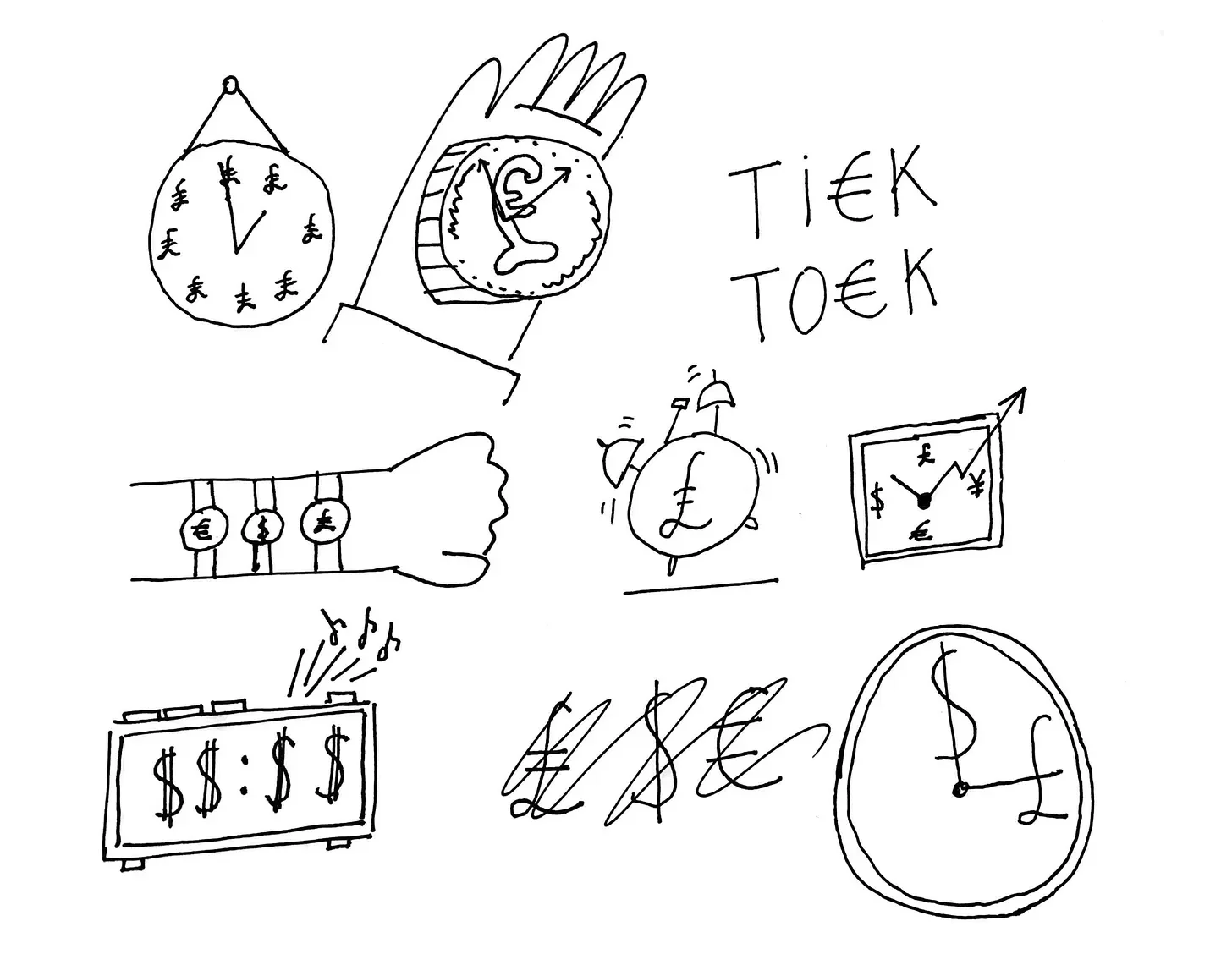
You’ll see I cheated a bit and broke my own rules! How dare I!? Only with one thumbnail, I think. You can see I turned a clock hand into an arrow, symbolising financial growth. This is another clichéd symbol so I’m not overly bothered.
If you find yourself going astray from the original symbols, don’t worry. This is natural and part of the creative process. As long as you don’t steer away from the original prompt concept, as this is your anchor.
In summary
With illustration, I’m always striving to visually depict something in a way that hasn’t been done before. Obvious, clichéd symbolism is a great place to start, it’s the raw material, especially if your stuck on a commission. Finally, in my experience, originality doesn’t always come from inventing new things all the time. It come from twisting and combining things that everyone already knows.
Thanks for reading. Pete :)